
Mokshada Ekadashi 2026
Saturday, 19 December 2026 · Shukla Paksha, Ekadashi tithi — Gita Jayanti — the fast that grants moksha.
Vrat & Parana timing
Ekadashi is fasted through the tithi and broken the next morning on Dwadashi within the parana window. The times below are for New Delhi and indicative — confirm the exact tithi and parana for your city on the Panchang.
Mokshada Ekadashi
Saturday, 19 December 2026
Times are for New Delhi and shift with your location. Check the day's Panchang for your city.
How the vrat is kept
A simple four-step observance, from the dawn sankalp to breaking the fast on Dwadashi.
Rise before dawn, bathe, and vow (sankalp) to keep the fast with a steady, pure mind.
Worship Lord Vishnu with tulsi, flowers, incense and a ghee lamp; offer fruit and panchamrit.
Set aside grains and pulses. Pass the day in chanting, katha and charity, and hold the night vigil.
Break the fast on Dwadashi morning within the prescribed window, after feeding the needy.
The vrat is completed only when it is broken correctly: on Dwadashi tithi, within the parana window and after Ekadashi has ended. In 2026 the parana for Mokshada Ekadashi falls the morning after Saturday, 19 December 2026, in New Delhi.
Vaikuntha Ekadashi, also known as Mokshada Ekadashi, is one of the most important Ekadashis of the year. It is dedicated to Lord Vishnu. As a symbol of devotion and faith, Vaikuntha Ekadashi is observed by devotees through fasting, praying, meditating, chanting mantras, and visiting temples to seek the blessings of Lord Vishnu. This day marks its important association with the belief in getting a place in Vishnu's abode, or Vaikuntha. Want to know the significance of Vaikunta Ekadashi, the puja muhurat and vidhi, or simply when is Vaikunta Ekadasi? If so, this page serves as a guide to this auspicious day and answers all your questions.
When Is Vaikuntha Ekadashi: Mokshada Ekadashi 2026 Date
Wondering when Vaikuntha Ekadashi is or what the parana timings are? If so, you can refer to the table below to get an idea of when the tithi begins, ends, and the accurate parana timings.
|
Vaikuntha Ekadashi 2026 |
Date & Time |
|
Vaikuntha Ekadashi |
December 20, 2026 |
|
Ekadashi Tithi Begins |
10:09 P.M., 19th December |
|
Ekadashi Tithi Ends |
8:14 P.M., 20th December |
|
Parana Time |
6:12 AM to 8:21 AM, 21st December |
Note: The Vaikuntha Ekadashi timing for Parana varies by city. The table above shows details as per New Delhi. It is, therefore, recommended to refer to the local panchang.
What Is Vaikuntha Ekadashi?
Vaikuntha Ekadashi is one of the auspicious Ekadashis, dedicated to Lord Vishnu. The word Vaikuntha represents “abode of Lord Vishnu”, whereas Ekadashi refers to the eleventh lunar day.
As the day is devoted to Lord Vishnu, it is observed through fasting, Vishnu worship, prayers, mantra chanting and spiritual practices. It is also a day when devotees visit Vishnu temples and participate in special ceremonies. Further, one of the important events on this day is Vaikuntha Dwaram, the opening of the special gateway. This observance is prominent in many parts of India and is especially popular among Vaishnava communities.
What Is the Significance of Vaikuntha Ekadashi?
The significance of Vaikuntha Ekadashi is closely associated with Lord Vishnu, spiritual discipline, devotion, fasting, and the traditional aspiration for moksha. You can go through the following points to understand this day in detail.
Dedicated to Lord Vishnu
Vaikuntha Ekadashi is primarily dedicated to Lord Vishnu. He is one of the principal deities in Hinduism and the preserver of the universe. Devotees dedicate this day to Lord Vishnu by observing a fast, offering prayers, flowers, Tulsi leaves, and lamps. Many devotees also chant mantras such as “Om Namo Bhagavate Vasudevaya” and recite Vishnu-related scriptures to seek his divine grace and to show devotion.
Associated with Moksha
One of Vaikuntha Ekadashi significance is its association with moksha or spiritual liberation. It is believed that devotees who fast, pray, and meditate on this day move closer to the divine and get a place in Vaikuntha. Overall, the concept of moksha is based on one’s religious beliefs rather than on a guaranteed outcome. Overall, for many devotees, it is a day that helps them reflect on their spiritual path and deepen their relationship with Lord Vishnu.
Symbolic Opening of Vaikuntha Dwaram
The opening of Vaikuntha Dwaram, or Swarga Vaasal, is a unique tradition of this Ekadashi. On this day, many Vishnu temples construct a special gateway. It represents the entrance to Vaikuntha, the divine abode or shrine of Lord Vishnu. Devotees pass through this gateway with the aspiration to attain moksha or spiritual liberation. This is why many Vishnu temples attract large numbers of devotees or worshippers on this Ekadashi.
Promotes Devotion and Self-Discipline
Vaikuntha Ekadashi is one of the days that teaches one to practice self-discipline and have ultimate faith in Lord Vishnu. On this day, devotees engage in mantra chanting, prayers, or meditation to promote devotion to Lord Vishnu. Also, fasting on this day involves dietary restrictions and fixed timings, which promote self-discipline and give one a chance to ponder every action and thought with greater awareness and reflection.
Vaikuntha Ekadashi Puja Vidhi
The Vaikuntha Ekadashi Puja Vidhi can take place at home or at a Vishnu temple. Be it anywhere, the following steps outline a common vidhi or procedure one can follow without doubt.
- Wake up early and take a bath; if possible, add Gangajal.
- Wear clean clothes. Prepare yourself for the day by being physically and mentally clean.
- Clean the puja space and set up an idol or image of Lord Vishnu.
- Place Lord Vishnu on a wooden platform, placing a yellow cloth underneath and dressing him in the same colour attire.
- Light a diya and an incense stick to invoke positivity.
- Take a Sankalp by reciting your name, place, and reason for observing the Ekadashi vrat, and pray to him to shower his blessings for the successful completion of the vrat or fast.
- Offer flowers and Tulsi leaves to Lord Vishnu, as has been carried out in your family for several years.
- Offer fruits or permitted naivedya for Bhog to Lord Vishnu.
- Chant Vishnu mantras such as “Om Namo Bhagavate Vasudevaya,” or “Om Vishnave Namah.”
- Afterwards, read or listen to the relevant Mokshada Ekadashi Katha.
- Conclude the day with Aarti.
Note: Devotees can also read the Bhagavad Gita, Vishnu Sahasranama or other Vishnu-related scriptures during the day to invoke blessings and understand the spiritual significance of this day in depth. Further, if you have any doubts about the exact puja vidhi, it is best to talk to an astrologer.
Vaikuntha Ekadashi Vrat Katha
In the Satya Yuga, there lived a powerful demon named Muran or Mura. He had divine powers that always turned the tables in his favour. He always won and was full of arrogance. Besides that, it made him win all three worlds. He even defeated the gods and drove King Indra out of his kingdom.
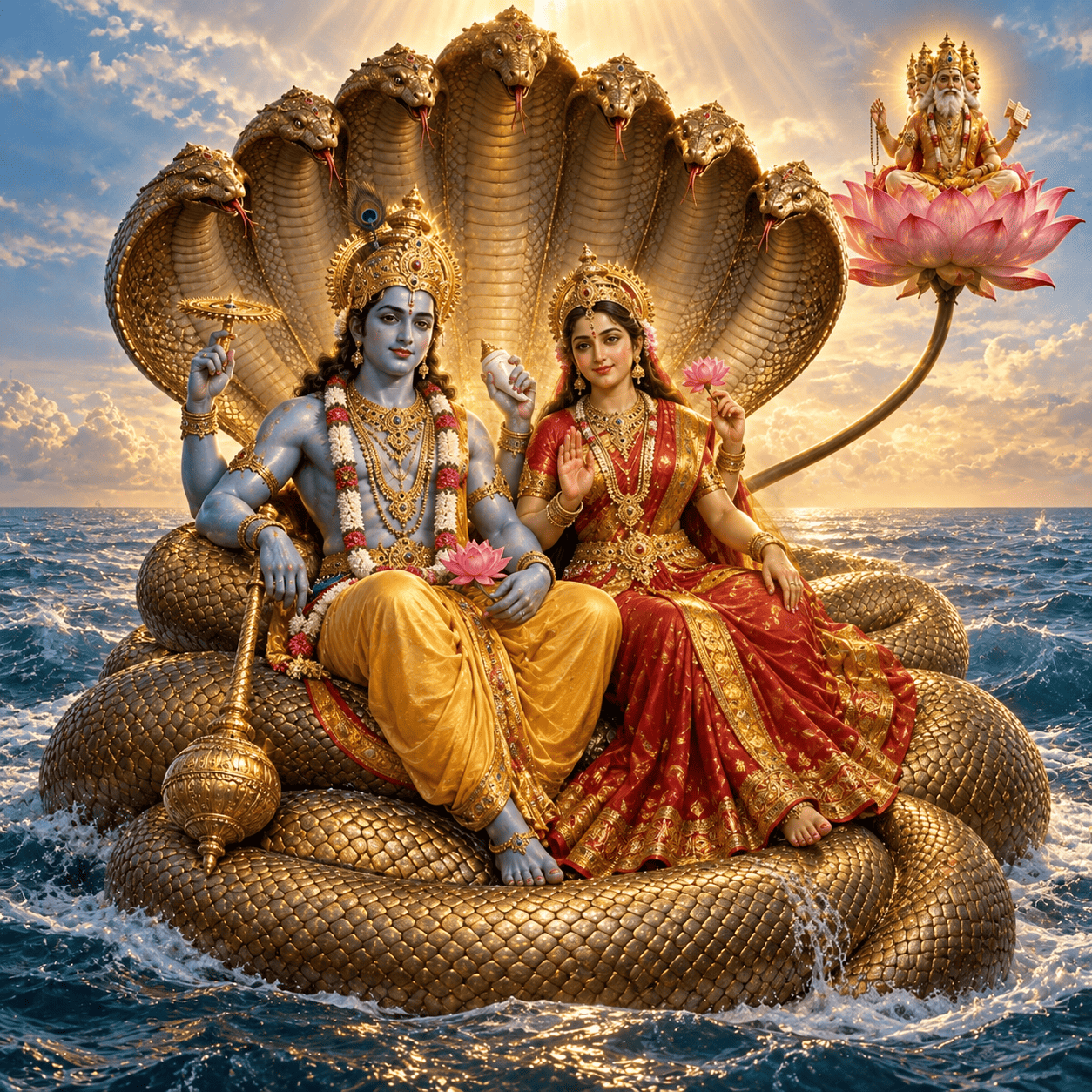
Seeing the power being misused, Indra and other gods turned towards Lord Shiva for help. It was then that Lord Shiva directed the gods towards Lord Vishnu, the protector of the universe. At that time, he was resting in the cosmic ocean of milk (Ksheera Sagara).
After hearing the gods' request and pleas, Lord Vishnu agreed to the war and fought the demon army. A battle broke out between Lord Vishnu and the demon army, in which he defeated them one by one, but when he fought Muran, he proved to be incredibly resilient and powerful.
Lord Vishnu got exhausted by the unstoppable fight that lasted for centuries, and he decided to pause the battle. It was when he travelled to Badrikashrama. He entered a large cave there, named Haimavati, to rest and enter a deep yogic sleep (Yoga Nidra).
The egoistic and arrogant Muran followed Lord Vishnu until the cave. When he saw Lord Vishnu there, he picked up his weapon with the clear intent to kill him.
At that exact moment, a radiant, powerful, and beautifully armed female deity (Shakti) emerged directly from the consciousness and body of the sleeping Lord Vishnu. Before Muran could strike, the goddess let out a thunderous roar, engaged the demon in a brief battle, and swiftly slayed Muran, saving the Lord.
When Lord Vishnu woke from his sleep, all he could see was Muran, the demon, dead, and a glowing goddess standing before him. He asked the goddess who she was, and she replied that she was born from his divine energy. Lord Vishnu was impressed by his devotion and dedication.
Seeing her determination and willpower, Lord Vishnu blessed her and named her Ekadashi. He also granted her a supreme boon: "Anyone who keeps a fast on the 11th lunar day, becomes self-aware, meditates, and prays to me will directly enter my supreme abode, Vaikuntha, bypassing the cycles of rebirth." Also, as Lord Vishnu opened the gates of his heavenly abode on this day to welcome the gods and honour Goddess Ekadashi, it came to be known as “Vaikuntha Ekadashi.”
Key Takeaways of this Katha
This story symbolises:
- The inner battle between our spiritual self (Vishnu) and our negative energies
- Awakening of inner spiritual strength and the defeat of negative energies, namely ego, misuse of power, and arrogance.
What to Do on Vaikunta Ekadashi?
You don't need a list of things to observe on Vaikunta Ekadasi. Simply, the mantra for the day lies in devotion, restraint, and time spent remembering Lord Vishnu. Even a simple routine works well.
Begin the Day Early: Start the day on a fresh note by waking up early. Take some time to get ready. Jump into the shower, put on clean clothes, and say a quick prayer to set a positive tone.
Place Lord Vishnu in Puja Area: As a sign of devotion, place a picture or statue of Lord Vishnu, or any of his forms, such as Krishna, Venkateswara, or Narayana, in your Puja area. You can offer him flowers, Tulsi leaves, or fruits. Whatever your family traditionally uses for prayers.
Offer Prayers to Lord Vishnu: Before you begin offering him prayer, take a sankalp (oath) on how you will observe the fast, and seek his blessings for its successful completion.
Take a few moments to focus on Vishnu. You can do this by repeating his name or try chanting a mantra. Remember, even 10-15 minutes of quiet time is really helpful, especially if you're busy with work or taking care of things at home.
Read Something Spiritual: Take a moment to connect with something deeper or spiritual. You can read a few lines from a spiritual book like the Bhagavad Gita, or listen to stories about Vishnu. It will help you learn about the importance of Ekadashi. The goal for the entire day is to keep your mind focused on what really matters.
Visit a Vishnu Temple: After you offer prayers, you can consider visiting a temple dedicated to Lord Vishnu. Many of these temples have a special opening of the Vaikuntha Dwaram or Paramapada Vasal on this day. It is a good opportunity to go for darshan. You can check if there's a temple near you that's doing something special. It is a wonderful way to experience the divine.
Do Seva or Charity: Doing charity for others on this day is considered good. You can simply take the initiative by feeding someone who's hungry or donating old or new clothes to someone at a temple. It can also mean supporting someone who's struggling. It doesn't have to be something big or beyond your budget; even small acts make a difference.
Stay Calm and Focused: Do not indulge in pointless arguments or let anger get the best of you. Refrain from wasting your time on gossip or distractions from what's important. For many people, it is difficult. Having this kind of self-control is just as vital as following traditional practices. It's about finding peace within yourself and staying true to what matters.
Note: When it comes to fasting for Vaikuntha Ekadashi, choose a method that fits your lifestyle and health. You don't have to fast strictly to celebrate Vaikunta Ekadasi; there are other ways to observe this special day.