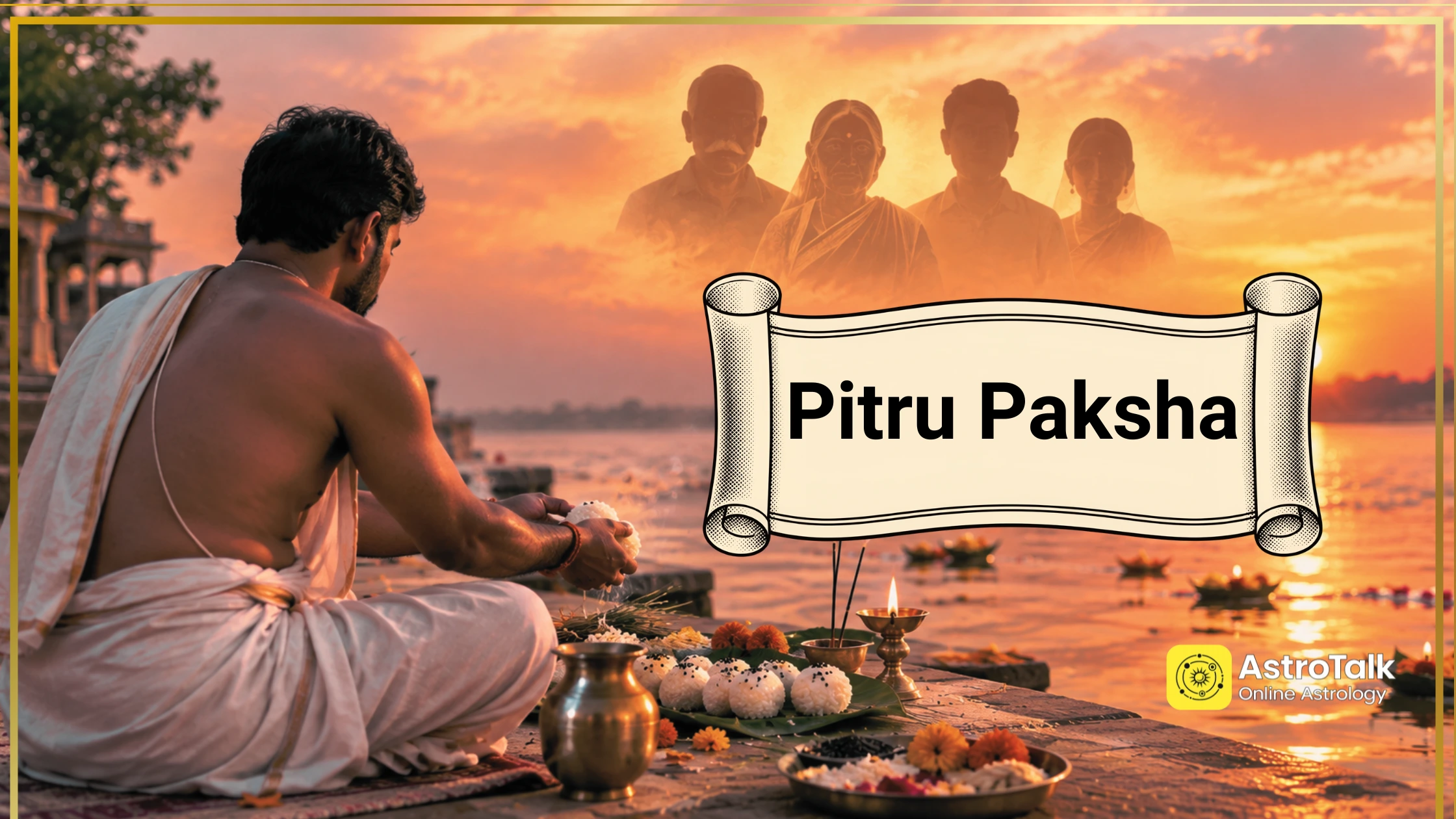
Pitru Paksha is observed every year as a sacred 16-day period to remember and honour our ancestors. During this period, Hindus perform Shraddh rituals with love, devotion and gratitude, seeking blessings for the well-being of their families and paying respect to their ancestors.
In 2026, Pitru Paksha begins on Sunday, September 27 (Pratipada Shraddha) and ends on Saturday, October 10. The final day is known as Sarva Pitru Amavasya (Mahalaya Amavasya), which is considered one of the most important days of this Holy Period. This sacred period falls during the Krishna Paksha of the Ashwin month and is dedicated to remembering and honouring our ancestors.
Note: Even though 26 September will be a Purnima Tithi as per the Hindu Panchang, some people will observe the first day of Pitru Paksha on 26th, as Purnima will last only until 10:18 pm, after which Pratipada Tithi will begin.
| Date | Day | Tithi/Shraddha Observed |
| September 26, 2026 | Saturday | Purnima Shraddha |
| September 27, 2026 | Sunday | Pratipada Shraddha |
| September 28, 2026 | Monday | Dwitiya Shraddha |
| September 29, 2026 | Tuesday | Tritiya Shraddha |
| September 30, 2026 | Wednesday | Chaturthi Shraddha |
| October 1, 2026 | Thursday | Panchami Shraddha |
| October 2, 2026 | Friday | Shashthi Shraddha |
| October 3, 2026 | Saturday | Saptami Shraddha |
| October 4, 2026 | Sunday | Ashtami Shraddha |
| October 5, 2026 | Monday | Navami Shraddha |
| October 6, 2026 | Tuesday | Dashami Shraddha |
| October 7, 2026 | Wednesday | Ekadashi Shraddha |
| October 8, 2026 | Thursday | Dwadashi Shraddha |
| October 9, 2026 | Friday | Trayodashi and Chaturdashi Shraddha |
| October 10, 2026 | Saturday | Sarva Pitru Amavasya Shraddha |
Note: Tithis may change based on the lunar calendar; it is best to check with a local Panchang for the precise dates and Shraddh Muhurat (auspicious timings) for your region. The last day of Pitru Paksha is called Sarva Pitru Amavasya.
Pitru Paksha is a time to remember our ancestors, honour them, and show gratitude. Ancestors are a vital part of the family in Hinduism and are offered respect, water, and food through Tarpan and Shraddh rituals, with faith and humility. It is believed to pacify the ancestors, bestow their blessings upon the family, and eliminate any Pitru Dosh (ancestral curse) in the Kundli (birth chart). A key ritual during Pitru Paksha is Daan (charity). People may give donations in the form of food, clothes, grains or any other items to the needy, Brahmins, Cows, birds, etc., in remembrance of their ancestors.
Shraddh literally means ‘faith’ and is the set of rituals people perform to offer reverence and satisfaction to their departed ancestors. These are based on their religious faith and devotion, and can vary depending on regional customs. These rituals include prayers, food offerings, Pind Daan and charitable acts in memory of ancestors.
Tarpan is basically an offering of water in remembrance of our ancestors and is part of the Shraddh ritual, usually followed by chants or prayers.
Pind Daan involves the offering of a Pind made of flour and specific items like rice and other ingredients, as a symbolic representation of the body or spirit of ancestors.
This act ensures that the ancestors are content and well taken care of in their afterlife. So, while Pind Daan and Tarpan are an essential part of Shraddh, the term Shraddh embodies the entire gamut of ancestral worship performed during Pitru Paksha.
Gaya ji is considered one of the most sacred places for Pind Daan, especially during Pitru Paksha. It is believed that performing this sacred ritual here helps the souls of ancestors attain peace and liberation.
Performing Shraddh can vary from family to family and across different regions. If you’re unfamiliar with the ritual, it is highly recommended to follow your family traditions or seek guidance from an expert astrologer on call.
You can observe the period in a simple and respectful way.
Concentrate on grace, dignity, and remembrance instead of blindly following rituals.
Communities may have different rituals during Pitru Paksha. Hence, other customs may also be followed. The most common things people usually avoid are:
Pitru Paksha begins on September 27, 2026, with Pratipada Shraddha, and ends on October 10, 2026. The final day is Sarva Pitru Amavasya.
Practices can vary across families and communities during Pitru Paksha. It is advisable to follow your family traditions or seek guidance from an experienced priest or elder.
Pitru Dosha is traditionally associated with ancestral influences in Kundli. In Hindu astrology, it is discussed in relation to ancestral matters and is considered by astrologers when reading a birth chart.




Choose your and your partner's zodiac sign to check compatibility



2026 Astrotalk (Powered by Astrotalk Services Private Limited & Astrotalk Online Private Limited). All Rights Reserved